

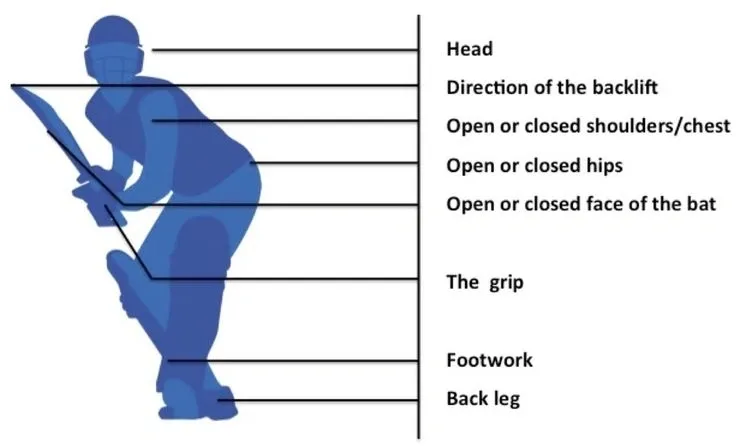
Cricket batting techniques are the foundation of a batter’s success. A strong technique allows a player to face diverse bowling styles, adapt to pitch conditions, and build long innings under pressure. From timing the perfect drive to mastering the delicate sweep, these techniques distinguish average players from legends.
Every cricketer, whether at a junior level or international stage, relies on proper batting fundamentals. Observing greats like Sachin Tendulkar, Virat Kohli, or Steve Smith reveals how consistent application of these techniques leads to extraordinary performances over years.
Key aspects of cricket batting techniques
The essence of successful cricket batting techniques lies in balance, footwork, shot selection, and mental readiness. Balance allows players to transfer weight effectively during shots, creating power without losing control. Footwork ensures correct positioning against fast bowlers or spinners, helping batters adjust to line and length.
Shot selection, based on reading the bowler and pitch, prevents risky strokes that could lead to early dismissals. Mental readiness, on the other hand, prepares a batter for pressure situations, whether chasing a target or stabilizing an innings.
The importance of grip and stance
A strong stance and proper grip are the first step toward mastering cricket batting techniques. The grip should feel natural but firm, allowing control over both defensive and attacking strokes. A slightly bent front knee and relaxed shoulders create a stance that is ready for quick movement and shot execution.
Players like AB de Villiers demonstrate how subtle adjustments in stance can lead to innovative shot-making without compromising balance. The stance is more than a physical setup—it’s a psychological preparation for what’s ahead.
Mastering footwork for precision
Footwork separates good batters from great ones. Quick and decisive foot movement helps to reach the pitch of the ball or create room for shots. Forward movement against spinners and lateral adjustments against fast bowlers ensures proper alignment with the delivery.
Steve Smith’s unconventional yet effective footwork shows that adaptability is crucial. Even slight hesitation in foot movement can result in missed opportunities or dismissals, emphasizing why footwork is central to effective cricket batting techniques.
Playing defensive and attacking shots
Balancing defense and attack is vital for every batter. Defensive shots protect the wicket and help build confidence against challenging bowlers. Attacking strokes, when executed with timing and precision, accumulate runs quickly and keep bowlers on the back foot.
Legends like Brian Lara combined impeccable defense with aggressive stroke play, showing how mastering both aspects is essential for modern cricket. These techniques allow a batter to dominate across formats, from Tests to T20s.
Timing and hand-eye coordination
Timing is arguably the most crucial element of cricket batting techniques. Good timing turns even simple strokes into scoring opportunities. Hand-eye coordination ensures the bat meets the ball at the optimal point, enhancing control and placement.
Players like Virender Sehwag showcased explosive batting with perfect timing, proving that raw power alone is not enough—technique and coordination determine success consistently.
Handling spin bowling
Spin bowling challenges even the best batters. Using soft hands, precise footwork, and well-chosen shots can frustrate spinners. Playing late with the bat close to the body and using the crease smartly prevents being deceived by flight, turn, or variation.
Rahul Dravid, known as “The Wall,” epitomized this mastery. His patience and adjustment against spinners highlight the advanced application of cricket batting techniques in difficult situations.
Facing fast bowling
Fast bowling requires quick reflexes and strong fundamentals. Proper technique against pace includes playing with a straight bat, moving the feet back and forward, and maintaining a solid guard to handle short-pitched deliveries.
Jacques Kallis exemplified calm and composed batting against express pace, showing that a combination of reflexes and correct technique allows run accumulation even under high pressure.
Shot variety and innovation
Modern cricket demands creativity and innovation. Techniques like the reverse sweep, ramp shot, and innovative drives are becoming standard in T20 and ODI cricket. These shots require strong fundamentals, flexibility, and courage.
KL Rahul and Rishabh Pant use inventive stroke play, demonstrating how traditional cricket batting techniques can merge with modern innovation to challenge bowlers in limited-overs cricket.
Role of mental strength
Mental preparation is intertwined with physical technique. Batters must manage pressure, handle field placements, and adapt to match situations. Strategic thinking, patience, and focus are as important as footwork or grip.
Players like Steve Smith are known for their mental resilience, converting challenging match situations into personal milestones by relying on cricket batting techniques and a strong mindset.
Importance of practice and drills
Repetition builds muscle memory. Daily practice of drives, cuts, sweeps, and defensive shots reinforces technique. Practicing against both spin and pace ensures adaptability across conditions.
Kane Williamson demonstrates consistent performance, which comes from rigorous application of practice drills that enhance every aspect of cricket batting techniques.
Field awareness and running between wickets
Effective batting is not only about stroke-making. Understanding field placements and converting singles into doubles maximizes scoring potential. Quick running between wickets requires awareness and agility.
AB de Villiers consistently demonstrated how awareness, paired with skill, can turn singles into critical scoring opportunities, underlining the tactical side of cricket batting techniques.
Adapting techniques across formats
Different formats demand distinct applications of batting skills. Tests focus on patience and defense, ODIs on pacing the innings, and T20s on explosive scoring. Top players adjust their cricket batting techniques to meet these demands without compromising fundamentals.
Rohit Sharma excels in T20s with aggressive style while maintaining classical techniques in Test cricket, showing the versatility required for modern batting excellence.
Evolution of cricket batting techniques
Batting techniques have evolved over decades. From straight drives and orthodox shots to inventive strokes designed for shorter formats, the core fundamentals remain crucial. The evolution reflects changing demands of the sport, fitness standards, and global strategies.
Watching legends like Sir Vivian Richards, Brian Lara, and Virat Kohli provides insight into the balance of classical technique and contemporary adaptation.
Cricket batting techniques remain the cornerstone of a batter’s success. Mastery of grip, stance, footwork, shot selection, and mental preparation shapes careers and allows players to dominate across formats. Combining tradition with modern innovation ensures that every aspiring cricketer can reach peak performance with consistent practice and dedication.
Read also:
pakistan national cricket team vs bangladesh national cricket team match scorecard
sri lanka national cricket team vs australian men’s cricket team match scorecard
india national cricket team vs england cricket team match scorecard
india national cricket team vs england cricket team players